Your cart (0 items)


Buying bed linen is rarely straightforward. You walk into a store or browse online, and suddenly you face a barrage of terms. Retailers throw around words like bedspread, coverlet and comforter as if they mean the same thing. They do not. Each serves a highly specific function. Knowing exactly what separates them saves money.
It also stops you from waking up shivering in July or sweating through January. The differences come down to dimensions, fill weight and how the item sits on your mattress.
Think of the traditional bedspread as the ultimate cover-up. It drapes over the entire mattress and drops straight down to the floor. You hide the bed frame completely. Dust ruffles and valances become obsolete. Construction relies heavily on woven fabrics. Sometimes manufacturers apply a very light quilt technique. Do not expect heavy insulation here. These are decorative pieces first and foremost.
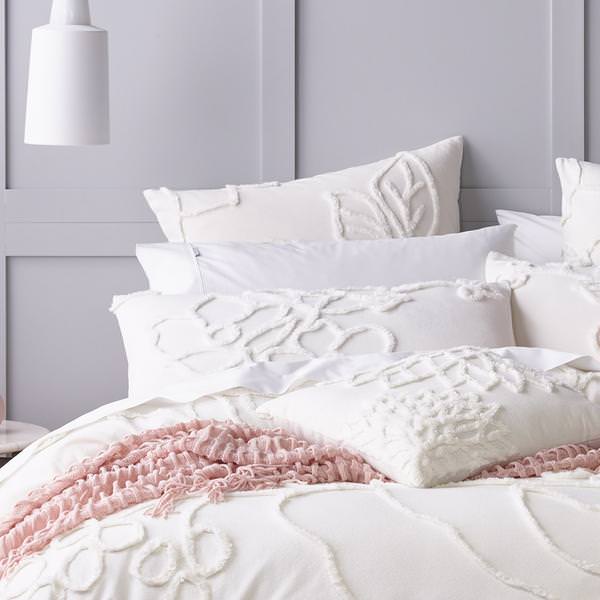
During a hot spell, a bedspread thrown over a flat cotton sheet is all you need. People styling a classic, formal master suite often hunt down precise dimensions, like queen-size bedspreads and coverlets, to get that flawless floor drop. Rich jacquard weaves and chenille detailing dominate this category. They bring a heavy, grounded look to a room.
Coverlets take a different approach entirely. They stop just past the mattress base. The bed frame stays visible. It is a much sharper, modern look. Like bedspreads, they sit firmly in the lightweight category. Yet their true value lies in layering.
Fold one across the foot of your bed. It adds immediate texture to a plain quilt. When the temperature drops unexpectedly, simply pull it up over your main blankets. Woven cotton and matelassé finishes work brilliantly in minimalist spaces. They avoid the bulky appearance of heavy winter bedding. Plus, they fit easily into a standard washing machine. To see how these adaptable layers function, explore the complete range of bedspreads and coverlets.
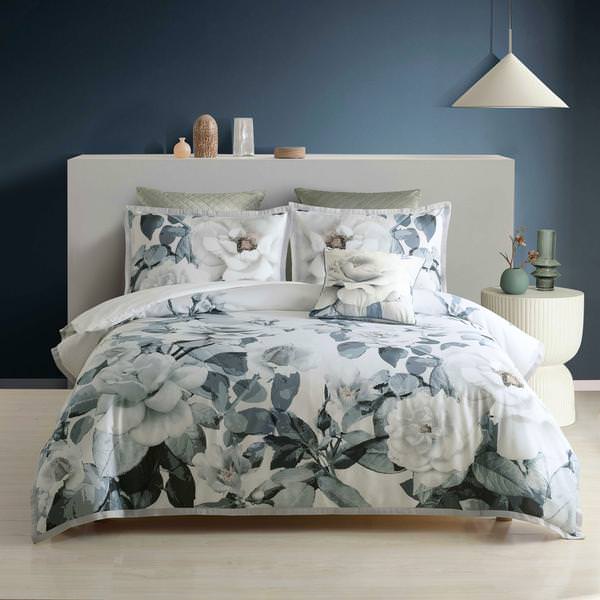
Then we have the comforter. This is where the insulation happens. Thick and plush, a comforter features a decorative outer shell permanently stitched to the filling inside. The filling stays put. Cold spots disappear. Making the bed takes seconds because you only deal with one thick layer. You just pull it up. Done.
You will often see quilted patterns across the surface. This stitching stops the internal wadding from bunching up in the corners. They trap heat exceptionally well. Naturally, cold sleepers love them. If you want maximum warmth without wrestling an insert into a separate casing every wash day, comforters solve the problem entirely. On the flip side, buyers who like changing their room's colour scheme every season might find traditional quilt cover sets more practical.
Geography dictates your bedding choices. Australia throws extreme weather at us. A ‘one size fits all' approach to linen fails miserably. A humid February night in Brisbane renders heavy doonas useless. A breathable cotton coverlet handles that humidity perfectly.
Moving down to Hobart in July, the requirements shift dramatically. You need serious heat retention. A thick comforter acts as the primary heat trap. Keep a folded coverlet nearby for those bitter nights when the mercury drops below zero. Spring and autumn require a middle ground. This is exactly why owning a few different weights makes sense. Guest bedrooms also benefit from this versatile layering approach, allowing visitors to easily adjust their own temperature during the night.
The architecture of your home often guides the final decision. Modern coastal builds with exposed timber frames look fantastic paired with a neatly tucked coverlet. Older heritage properties demand the sweeping, floor-length drama of a classic bedspread.
Maintenance matters too. Floor-length fabrics gather dust faster. You need to wash them more frequently if you have pets. Shorter covers avoid the floor entirely. Keep this in mind if you hate doing laundry.
Figure out your climate first. Then look at your furniture. Once the practicalities are sorted, you get to play with colours and textures. Browse Bianca's extensive bedspreads and coverlets collection to find the exact piece your room needs.